
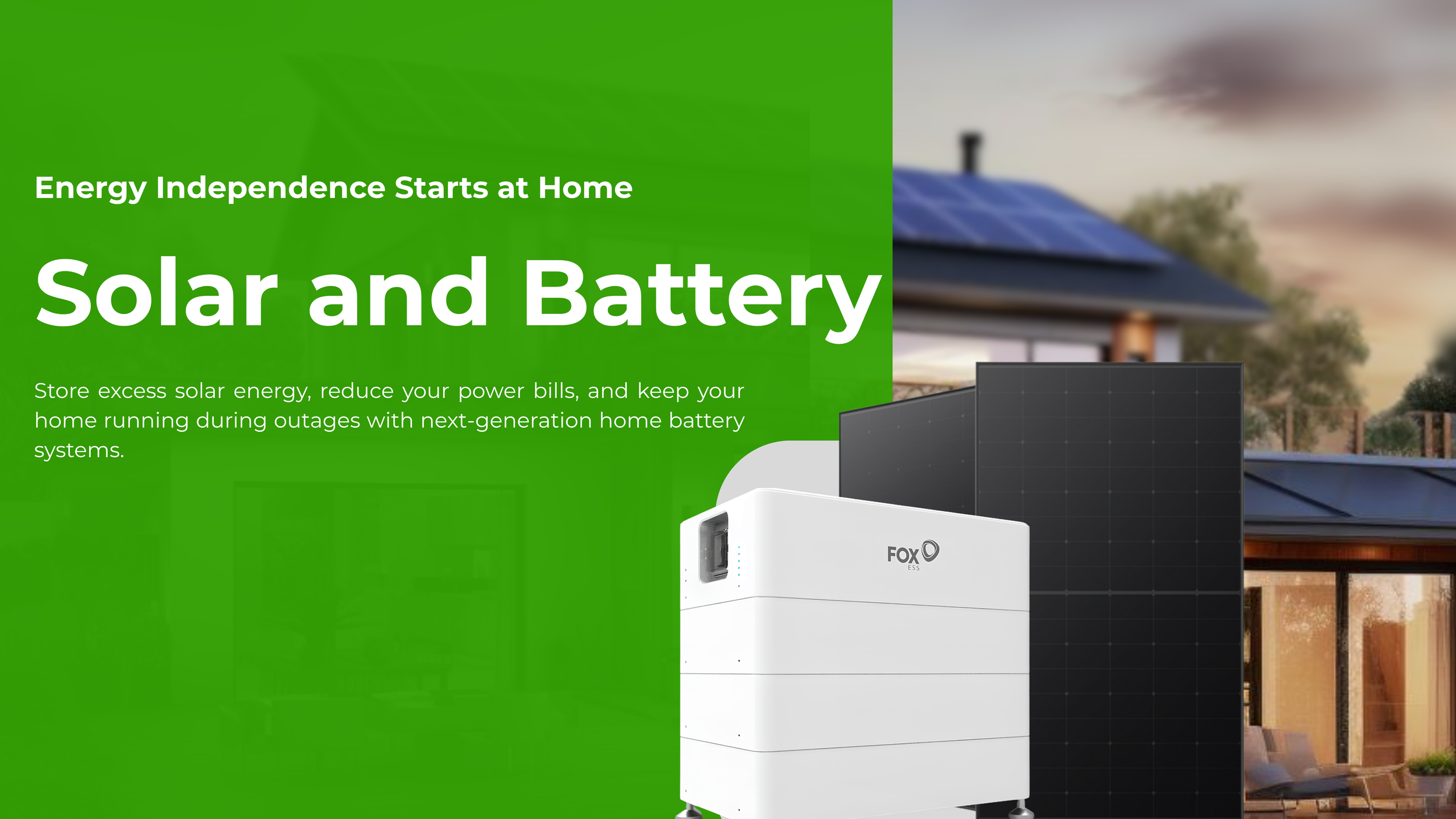
How solar and battery systems power your home
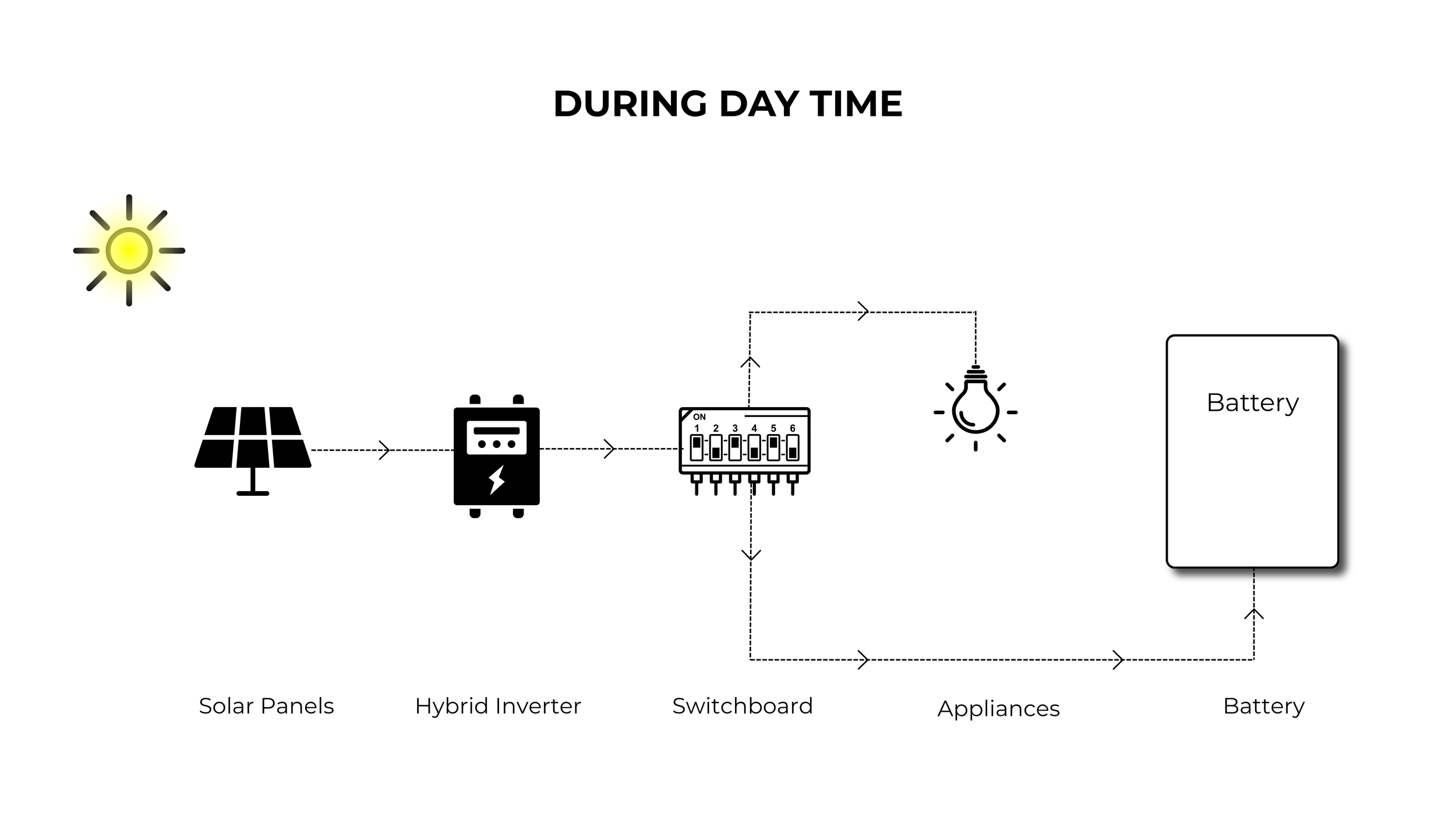
A solar power system uses rooftop solar panels to capture sunlight and convert it into electricity for your home or business. This electricity is used immediately to power your appliances, reducing your reliance on the grid and lowering your overall electricity costs.
Any excess energy that your system produces during the day does not go to waste. Instead, it can either be exported back to the grid or stored in a solar battery system for later use.
This is what makes modern solar energy systems for homes so effective — they generate clean, renewable energy while giving you more control over how you use it.
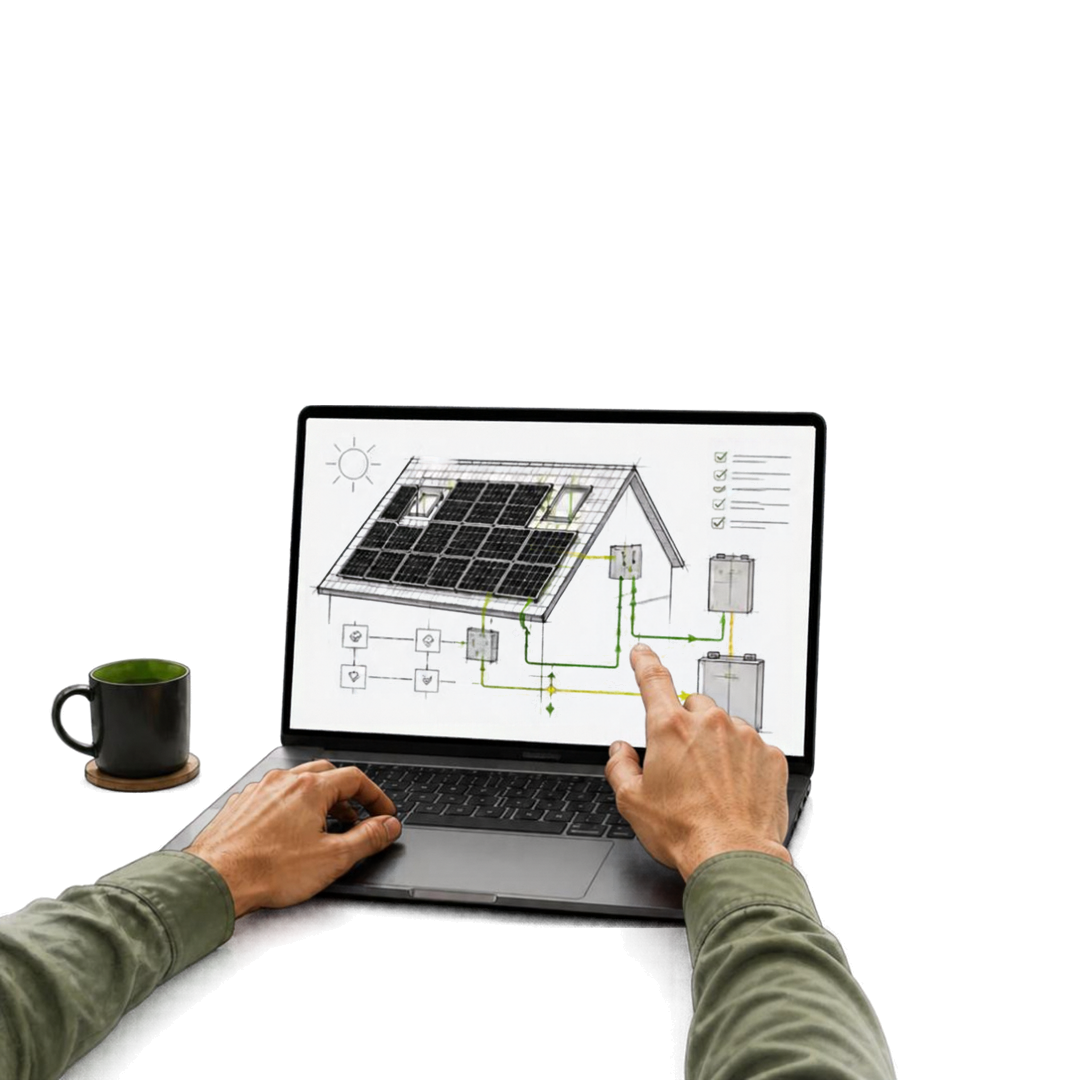
A typical solar and battery system for home use operates in four simple steps:
Solar panels turn sunlight into electricity for your home.
Your home uses that solar power first, cutting grid use and lowering bills.
Extra solar charges a battery; any remaining surplus can be sent to the grid.
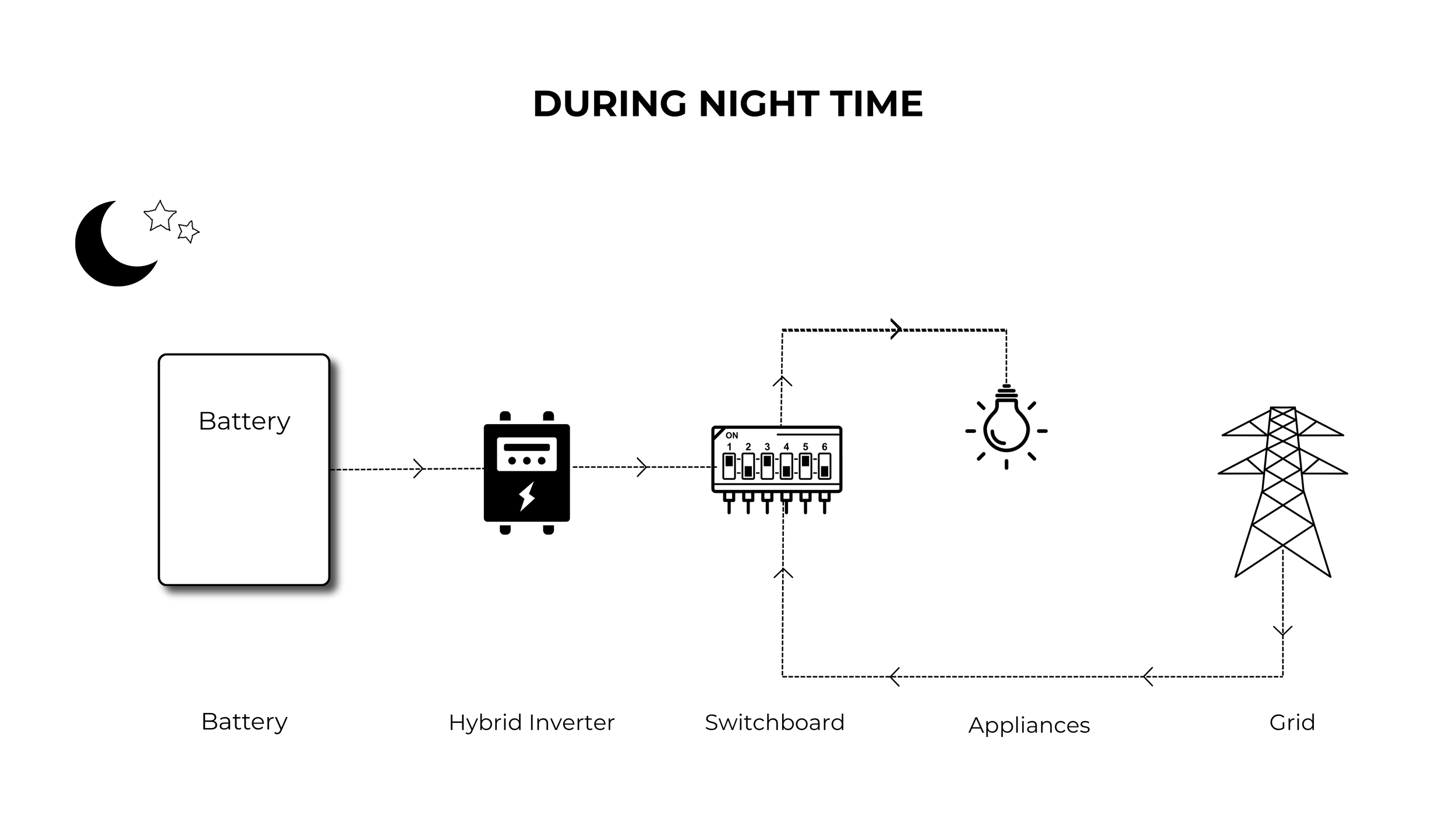
The battery saves energy for night, peak times, or power outages.
This arrangement ensures your home solar power system continues supplying electricity even when the sun isn’t shining, enhancing overall efficiency, reliability, and energy independence.
Why add a solar battery system?
A home solar battery system works alongside your solar panels to store unused energy instead of letting it go back to the grid for minimal credit.
This stored energy can then be used at night or during high electricity demand periods, helping you get more value from your solar panel system for home.
The key benefits include:
Greater energy independence
Lower electricity bills
Better use of your solar energy system
Backup power during blackouts (depending on system design)
Reduced reliance on rising electricity prices
For many Adelaide homeowners, a battery is the next step after installing solar panels, especially for those who want to maximise long-term savings and energy control.
Is a solar and battery system right for your home?
Not every home uses energy in the same way, so the right solar and battery system will look different from one household to another.
A good system starts with understanding how your home actually uses electricity. Things like your daily energy usage, when you use the most power, your roof space and your future energy needs all play a part.
Solar can help reduce the amount of electricity you need to buy from the grid, while battery storage can allow you to make better use of the solar energy your system produces — particularly when your household uses more electricity in the evening.
For some homes, solar alone may be the right choice. For others, adding a battery can make sense depending on their energy usage and how they want to use their system.
That’s why we look at the whole picture before recommending a system. The goal is to design solar and battery around your home, rather than simply choosing a system based on size or price.
Professional solar and battery installation in Adelaide
At Green Arrow Electrical, we design and install solar and battery systems for homes and businesses across Adelaide. Whether you’re looking at a new solar system, upgrading an existing one, or adding battery storage, we focus on getting the system right for your property, your energy usage, and your future needs — with safe installation and compliance with Australian standards.
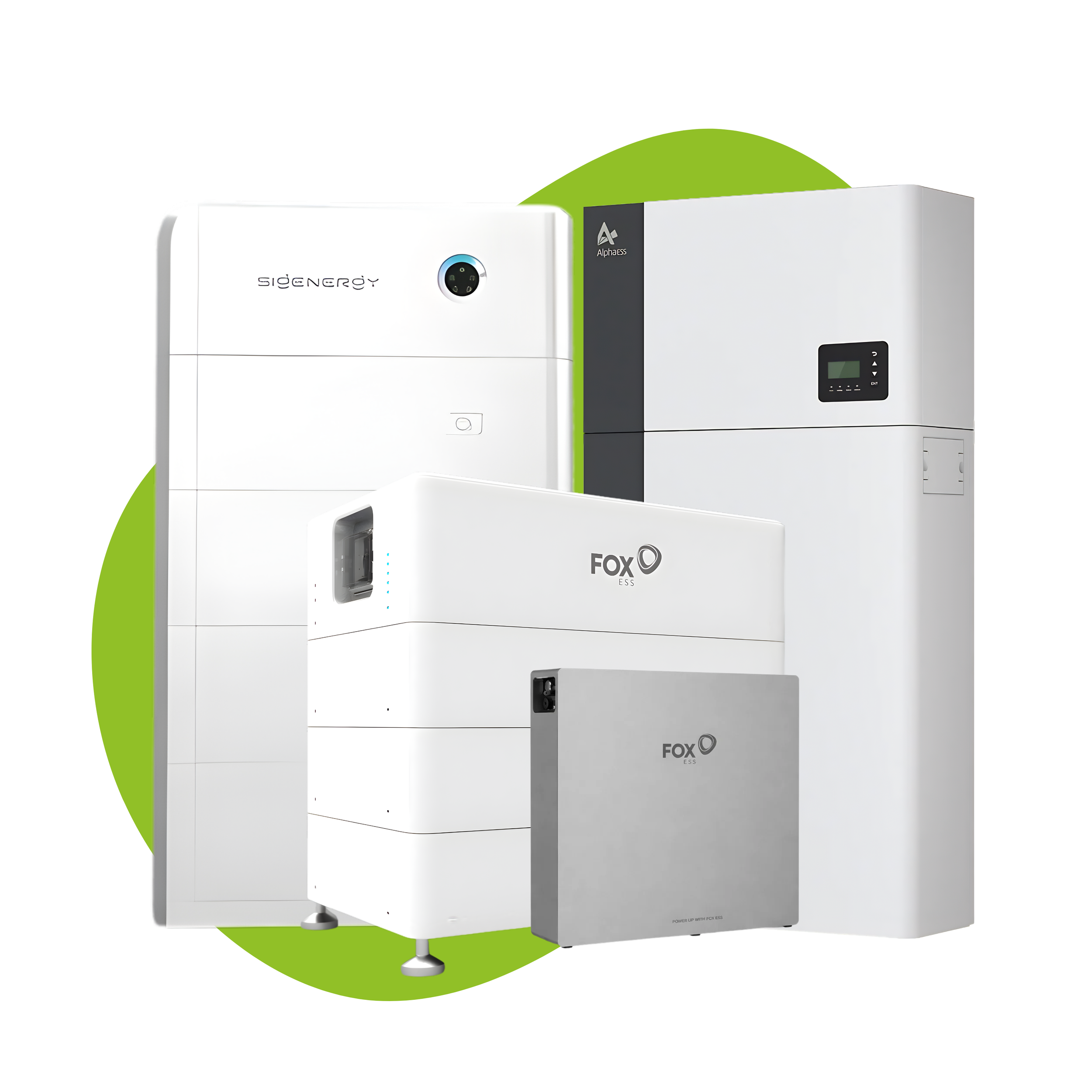
Brands We Prefer









Frequently Asked Questions
-
AC-coupled systems are typically used to add batteries to existing solar systems, while DC-coupled systems are more efficient for new installations where solar and battery are designed together.
-
Yes. Adelaide has strong solar conditions and relatively high electricity prices, making solar and battery systems highly effective for reducing bills and increasing energy independence.
-
Savings vary based on usage patterns, system size, and electricity tariffs, but adding a battery can significantly increase self-consumption and often deliver greater long-term savings than solar alone.
On average, a combined solar-and-battery system might reduce your electricity bill by up to 70–90%, depending on individual circumstances and system configuration.
-
System size depends on energy use, roof space, budget and equipment, so we tailor each system. Typical guides:
Small home: ~ 6.6 kW solar + 10 kWh battery
Medium: ~ 9.9 kW + 20 kWh
Large: ~ 13.3 kW + 41 kWh
Final design may change based on roof space, how much you use, and inverter/battery compatibility or whether you want lower bills or more energy independence.
-
Yes, but only if the system includes backup capability. In that case, the battery can power essential circuits or the whole home depending on system design.
-
Solar panels generate electricity during the day, powering your home first. Any excess energy is stored in the battery and used later when the sun isn’t shining, reducing the need to draw from the grid.
-
Key benefits include lower electricity bills, better use of your solar power, reduced reliance on the grid, and backup power during outages when configured correctly.
-
Yes. Most systems remain grid-connected to provide backup when solar and battery power are low and you need electricity, but overall grid consumption is still significantly reduced .
-
Yes, but it requires a larger solar array, bigger battery storage, and careful system design to cover all energy needs year-round, making it a higher upfront investment.
-
At night, your home runs on stored battery power. If the battery becomes low, the system automatically switches to grid power if you are connected.